The Truth About Journaling: Overcome Perfection and Find Consistency
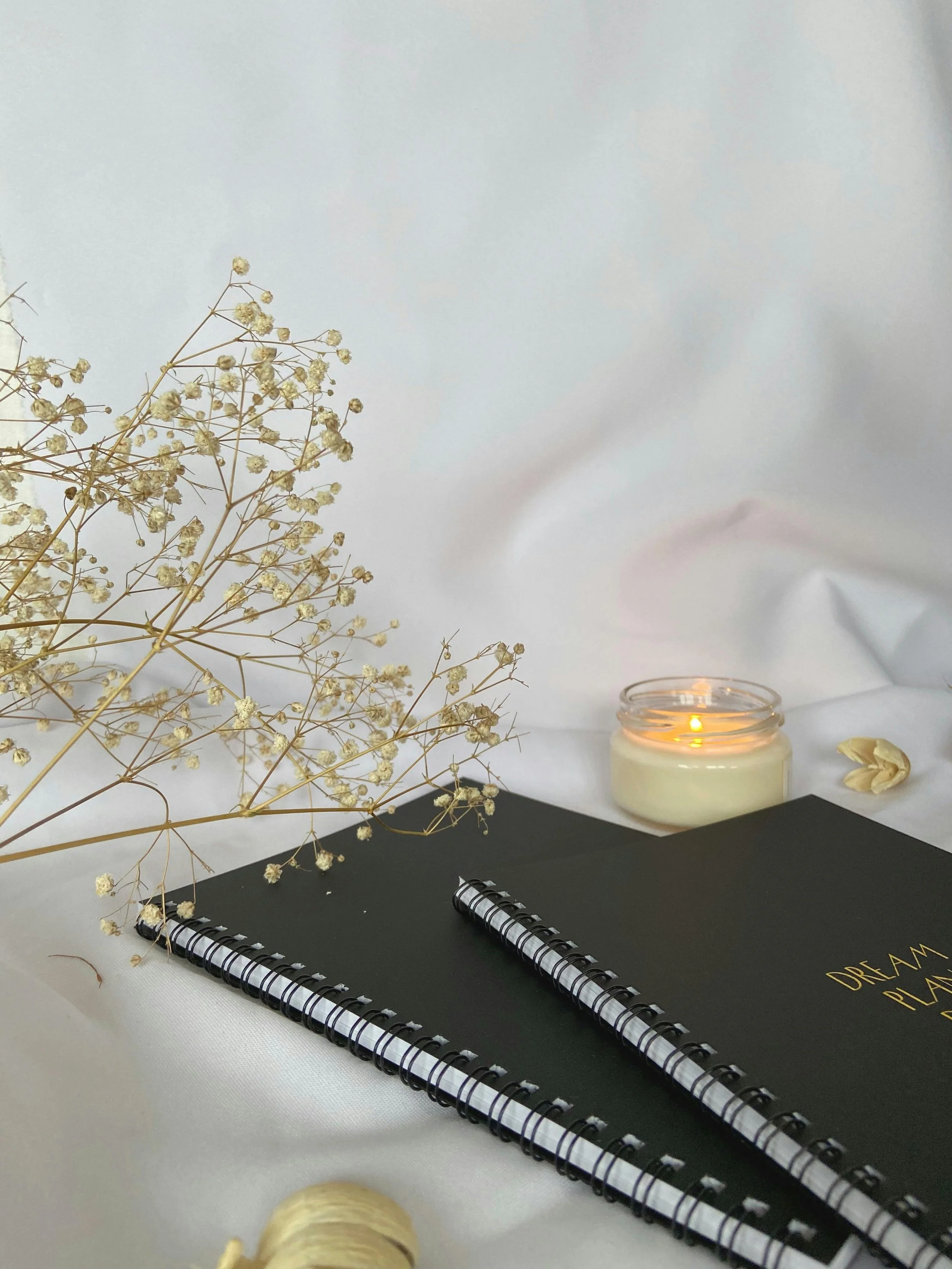
By now, you have likely seen the hype around journaling on social media and how it can change your life, yet you still find yourself buying a pretty journal and a matching pen, only to abandon them by the end of the month—been there. The goal isn’t perfection; your journal wants you to come as you are. What if I told you consistency doesn’t mean writing hours and hours a day? Let’s break down the myth so you can start showing up for yourself, with your journal by your side, like a loyal friend, not a judgmental frenemy.
Myth #1: “I don’t have time to journal for hours.”
The quality of your journal entries , being honest, vulnerable, and expressing your authentic feelings and thoughts is what matters most. It’s not about the time spent journaling, but about whether you're able to dive deeper into self-discovery. Spending time searching for insightful prompts can be a barrier to getting started. Another form of sabotage to quality journal sessions is feeling pressure to write what they think should be written, rather than what is truly on their heart and mind.
Numerous studies show that 15 minutes a day can benefit not only your mental but also your physical well-being. A 2018 study in JMIR Mental Health found that journaling for 15 minutes daily over three weeks lowered blood pressure and reduced cortisol levels by 19%, enhancing overall well-being. High cortisol levels are linked to various health concerns such as weakened immune function, elevated blood pressure, diabetes, and more. Now, I am not saying journaling is a magic pill that will solve all problems, but it is a tool that can contribute to the well-being and overall quality of your life. Remember, length isn’t equivalent to the effectiveness of each journal session.
Myth #2: “Journaling is only when you are sad or struggling.”
Have you ever had a disagreement or an awkward moment with a co-worker and instantly called your friend to vent? Did you notice that those minutes spent venting turned into hours, and you're still thinking about it the next day? That’s an example of brooding. If that’s not familiar, how about the opposite in the same scenario?
You hold your feelings in, pretend everything is fine, and then the co-worker makes another comment, and like a Coke bottle shaken up, you open up and erupt like a volcano. That's bottling your feelings. Both are rigid ways of dealing with our emotions, and are typical reasons why the journal is finally used. Journaling is a great way to regulate your feelings, but be sure to allow yourself to write about what is going right for you. Writing down what you're grateful for will show proof that you are blessed. Life is just ebb and flow. You can also express why you love yo
Myth #3: “I’m not a great writer.”
Well, hello there, Miss Perfectionist. I have some good news to ease your worries. Journaling is not writing an essay. The grammar monster is not out to get you. You are not graded on how you feel, your thoughts, or your summaries at the end of the day. Freeing isn't it? You do not have to be a novelist to soak up the benefits of journaling. One tip that can help if you are becoming nervous about dairy writing is to try voice journaling. Just open up your Voice Memos app, press the record button, speak, and watch how your words flow with ease. The nice feature of this app is the transcription. When you’re ready to play the recording back, you can see your words. Capturing your reflections either way is journaling.

Myth #4: “My handwriting isn’t pretty.”
Your journal is not for others to read. Look, queen, as long as you can understand your handwriting, that is what matters the most. Unless you want to use journaling as an opportunity to work on your penmanship, go right ahead. However, to experience the benefits of journaling, you don't have to worry about your handwriting.
Myth #5: “My journal has to be pretty, neat, and organized.”
You are allowed to get creatively messy or broadly categorize your thoughts as you journal. You can set aside certain sections of your journal entry for gratitude and wins. You can color-coordinate the type of reflection with the related category or use that color to draw your response and incorporate glitter ink or fun stickers. Whatever best suits your personality, remember that you make the rules. The randomness in the layout of my journal entries creates a space where I can freely express myself without any limitations.
Myth #6: “You must follow a structured prompt every time.”
The great thing about journaling is that you decide what goes on your page. A great way to maintain a journal habit is to use your sessions to track your progress toward your goals and reflect on what you accomplished today, identifying lessons to apply tomorrow. If you use journaling to vent and process your emotions, you can use the blank pages to capture those moments. Journaling prompts are effective when you are unsure what to write about. Before I begin my journaling sessions, I take a deep breath and ask ‘What do I want to write about today?’
At times, I appreciate powerful questions because they help me explore an idea that I may not have considered before, and there are times when I know exactly what I want to write. If you find journal prompts helpful, make sure to check out our monthly theme at the beginning of each month, where we provide a journal prompt to help you practice self-discovery. I genuinely believe that the quality of questions you ask yourself shapes your quality of life.
Myth #7: “It doesn’t work unless I have a breakthrough.”
Oftentimes, new journalers may assume that “there’s nothing important to write about, so I’m not going to journal for the day.” You may not always have breakthroughs in your journaling, and that is perfectly fine. If you use journaling as a source to fix yourself, or solely when things go wrong or are tough at the moment, journaling will not become enjoyable.

First things first, you are not broken. You do not need fixing. Yes, you may have some things to work through, but there are various styles of journaling, such as scripting for manifestation, gratitude journaling, and inspiration journaling, to name a few. Journaling can be fun if you open your mind and are willing to learn different styles. All stages of your life and all emotions are worthy of documentation and reflection.
Myth #8: “I have to write as if someone else is going to read it.”
This is a big one. When I hosted journal sessions in the past, one concern that arose was the possibility of someone gaining access to your journal and reading it without your permission. If this is a fear of yours, I always suggest hiding your journal or getting one with a lock. I get it, we may have thoughts that we shove away because it feels strange and awkward to face them, or because we used our blank pages to process our raw emotions and wouldn’t share them with anyone else.
I love to think of it this way: “This is for me, this is a secret space for me, no one is judging me here, and I give you permission not to judge yourself.” Approaching my stress with compassion allows me to express myself freely, write honestly about how I feel, and mean what I say. I also want to note that if you have deep shame or guilt when reading your journal back, I wish to recommend speaking to a professional to process your thoughts, feelings, and emotions. At times, journaling or reflecting on things can get heavy, and there is nothing wrong with seeking professional help.
If you found this blog post helpful and are ready to pick up your journal to break through these limitations about journaling, reach out to me. I would love to hear which Mythbuster helped you the most.
